Letters from Tokyo #11: Culture Shock: When the Honeymoon Ended.
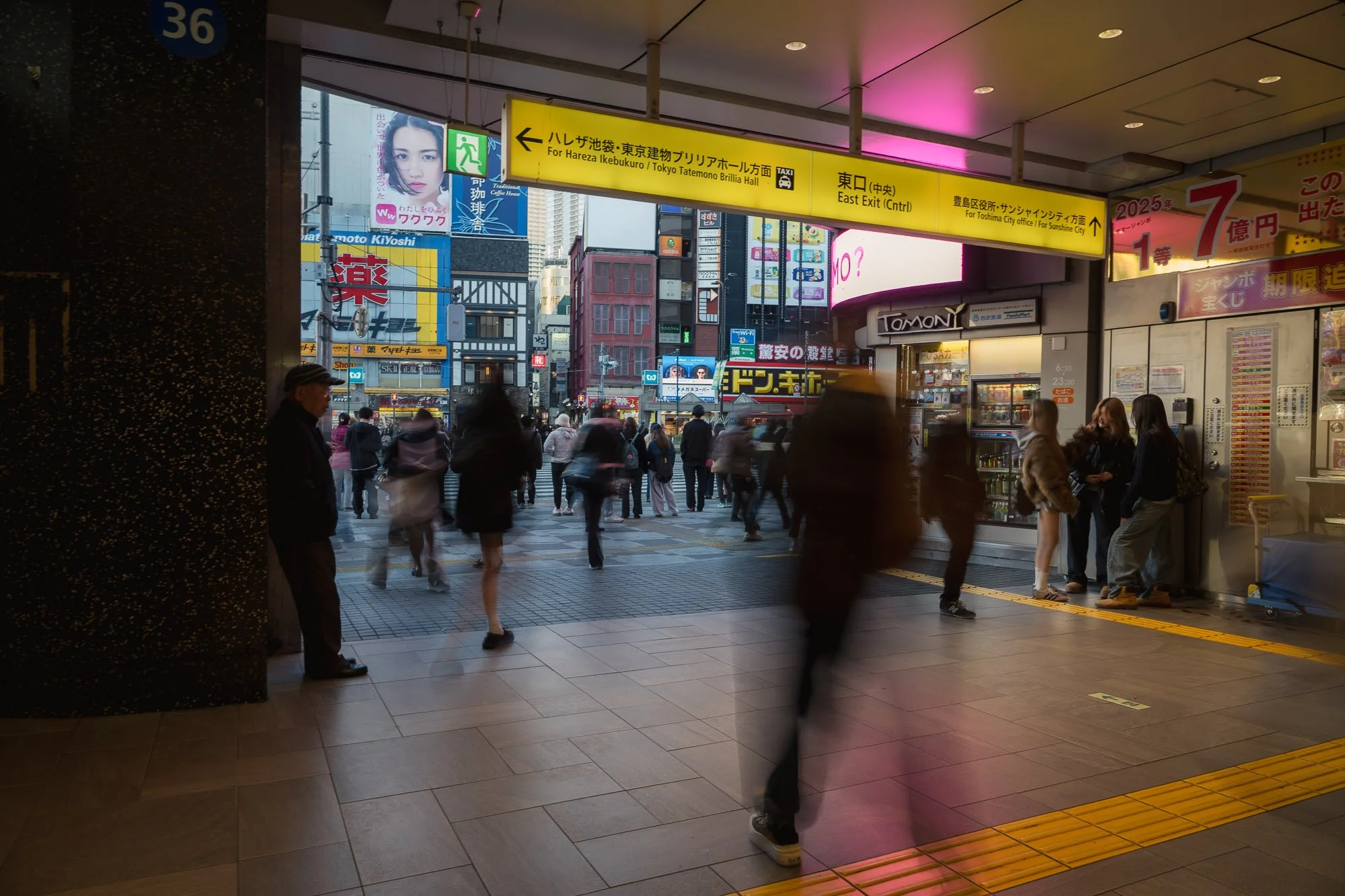
Present, but not quite part of the flow
I had read about culture shock before I moved to Japan.
I had even read Culture Shock Japan by Rex Shelley before I left, as if understanding the process in advance might somehow protect me from it. I knew, at least in theory, that moving to another country could be difficult: the honeymoon period, the frustration, the loneliness, the gradual adjustment.
But knowing what culture shock looked like on paper did not make it any easier.
That said, I never once regretted moving to Japan.
Not really. Not even during the worst parts. Somewhere deep down, I knew I had needed to leave the life I had in order to find out who I could become somewhere else. I needed to step away from the life I knew, even if I did not yet know what kind of life I was walking into.
But knowing that did not make the move itself any easier. If anything, it made the shock of it all that much more difficult.
I had left behind a whole life: friends, musical colleagues, familiar places, conversations, routines, and a version of myself that knew how to function within the corner of society that I inhabited.
In Japan, almost everything had to be rebuilt from scratch.
When the Honeymoon Ended
At first, though, it did not feel that way.
The first couple of months were full of energy. I went out, met people, tried out my terrible Japanese, said yes to invitations, made friends, made mistakes, and collected the kind of memories that only seem to happen when everything is new. Even not understanding things had a kind of charm to it. I was clumsy, but I was enthusiastic. I was out of my depth, but it was all exciting.
That was the honeymoon period.
And like most honeymoons, it could not last forever.
The moment that seemed to break something in me was embarrassingly ordinary.
I was trying to order a simple meal in McDonald’s. Nothing dramatic or important. Just one of those small daily tasks that should have been easy.
There was a “new” burger on the menu, and although I could not read everything properly, I asked, in what I knew then and know now was correct Japanese, what it was. The cashier looked at me with some discomfort and replied that they did not speak English.
That was what got to me. I had not spoken English. I had used the Japanese I knew. But the interaction had still failed before it had really begun. After a brief back and forth, still in Japanese, the cashier eventually blurted out, in perfectly good English, that it was a chicken burger.
That really stung. I felt emotionally winded.
But it was not really about the burger, or even McDonald’s.
It was about realising that I had become someone who could no longer do ordinary things without effort. I could not rely on fluency, charm (little though it was), or the social instincts I had spent my whole life developing. Something as small as ordering lunch could make me feel exposed, stupid and alone.
And once that feeling took hold, it was difficult to shake.
The Silence Got Louder
I thought getting my own place might help. It seemed logical enough. A place of my own would give me stability. Space. A little privacy. Somewhere to settle.
Instead, it made the silence louder.
There is a particular kind of loneliness that comes from closing the door on a small apartment in a country where you do not yet feel at home. Outside, life continues in a language you cannot fully enter. Inside, there is no one to misunderstand you, but no one to understand you either.
My social life became narrow. Mostly coworkers. People in the same situation, passing through the same strange little world of early adulthood abroad. We went out, drank, talked, laughed, commiserated and tried to make sense of everything.
But there was always movement. People came and went. Contracts ended. Some stayed for a year, some for less, some for longer than they expected.
And when any of them left Japan to go home, I felt something I did not like admitting.
Jealousy.
Not mild envy. Not a gentle sadness. Real jealousy. I don’t think I had ever felt that before.
It felt, in the worst moments, as if they had escaped from prison.
That was not fair to Japan, of course. Japan was not a prison. No one was keeping me here. I could have bought a ticket and gone home at any time. But emotionally, it felt more complicated than that. I could not bring myself to leave. Part of me wanted to run, but another part of me knew that going home would feel like giving up on something I had not yet understood.
It was not quite pride, although pride was probably involved. More than that, I felt I had come all this way for a reason, even if I could not yet articulate it.
So I stayed.
Not heroically. Not elegantly. But I stayed.
The People Who Stayed (and those that didn’t)
That period also changed the way I understood friendship.
Distance has a way of testing relationships. So does need. Some people I thought would be present were not. Others, from whom I expected very little, became important. It was not always dramatic. There were no great betrayals, no confrontations, no speeches. Just absences and unreturned calls. And, in a few precious cases, quiet acts of loyalty.
There were people in Japan I had known since childhood, people who had been part of some very happy memories and who, without knowing it, had probably planted an early love of the country in me. Because of that, I had imagined those old connections might become anchors when I arrived.
But those doors did not open in the way I had hoped.
That hurt more than I probably admitted at the time. Not because anyone owed me a life here, but because loneliness makes you reach for familiar names. When those names do not reach back, the silence feels louder.
But there was also one friend who stood by me.
He was a university student then, with his own life, pressures and future to think about, but he made time for me. He took me places, helped me arrange things I could not easily manage alone, and gave me somewhere to turn to when Japan felt too large and too overwhelming.
Looking back, I realise that cannot always have been easy for him.
At the time, I probably did not understand the weight of what he was doing for me. I was too caught up in my own head to see clearly how much I was relying on someone else. But I see it now.
I am still grateful. We remain close, and I like to think I am slowly repaying some of that kindness.
It wasn’t just people living in Japan either.
One other person who became a source of comfort and strength during those years was my uncle. He visited Japan for work once a year and always made time for a hotel breakfast and a long catch-up. In some of the darker moments, those mornings helped more than he probably knew. Looking back, I think those visits changed our relationship as I feel much closer to him now than I ever did before.
The strange thing about culture shock is that it does not always look dramatic from the outside. You still go to work, answer questions, buy groceries, make jokes, and appear, to most people, more or less fine.
But underneath that, there can be a quiet erosion of confidence. You hesitate before speaking. You rehearse simple sentences. You avoid things that might make you feel foolish. Even ordinary life begins to require careful calculation.
And because I had chosen to be here, it felt strangely difficult to admit that I was struggling.
After all, this was the life I had wanted.
So what right did I have to complain?
That, I think, was part of the trap. Wanting change does not make the loss of familiarity painless.
Learning to Live Here
Things began to shift in 2005, almost two years after I arrived.
The first change was simple. I met another British man completely unconnected to my job. On paper, we had little in common, including very different political and spiritual views, but that did not seem to matter very much.
We enjoyed hanging out.
Sometimes that is enough.
We went out, met people, talked nonsense, and gradually I started to come out of my shell again. It gave me a social life that was not tied to work. It reminded me that Japan did not have to be a place where I struggled. It could also be a place where I laughed, wandered, wasted time, and built ordinary memories.
Then, a few months later, I met Ayako.
And that was when things really started to fall into place.
Through her, I saw a side of Japan that I could not have accessed in the same way on my own. Family. Local routines. Small customs. Places I would not have found. Assumptions I would not have noticed. Ways of thinking and doing that gradually became less mysterious, even when they still challenged me.
That did not magically erase the difficulty.
But it changed my relationship with it.
Looking back, my experience almost perfectly mirrored the pattern Rex Shelley described in Culture Shock Japan. At best, he suggested, people might move through the process in three to six months. At worst, it could take eighteen months to two years.
For me, it took almost two years.
At the time, that felt like failure. But, in hindsight, that is a harsh way of looking at it.
I had not just moved countries. I had dismantled one life before I had learned how to build another.
These days, I feel content with my life in Japan. Not perfectly fluent. Not perfectly integrated. Not free from frustration. I still experience challenges around communication and expectations, but those moments no longer knock me off balance in the same way.
Japan is not new to me anymore. It is not a honeymoon, but it is certainly not a prison. It is simply where my life is.
I have never regretted moving to Japan.
But I did have to grieve the life I left behind before I could properly begin the one I have now.
Sincerely,
Ross Harrison - A Tokyo-based photographer documenting a more authentic Japan beyond social media posts and postcards.
Further reading from Letters from Tokyo
If this piece resonated with you, you may also be interested in:
Why I Came to Japan
The story of the life I left behind, and why Japan became the place I needed to go.
When Tokyo Quietly Became Home
A later reflection on the slow, almost invisible process of realising Tokyo had become home.
Not Quite Belonging
On living in Japan for more than two decades, and why fitting in is not always the same as belonging.