Elope in Japan: A Practical Guide
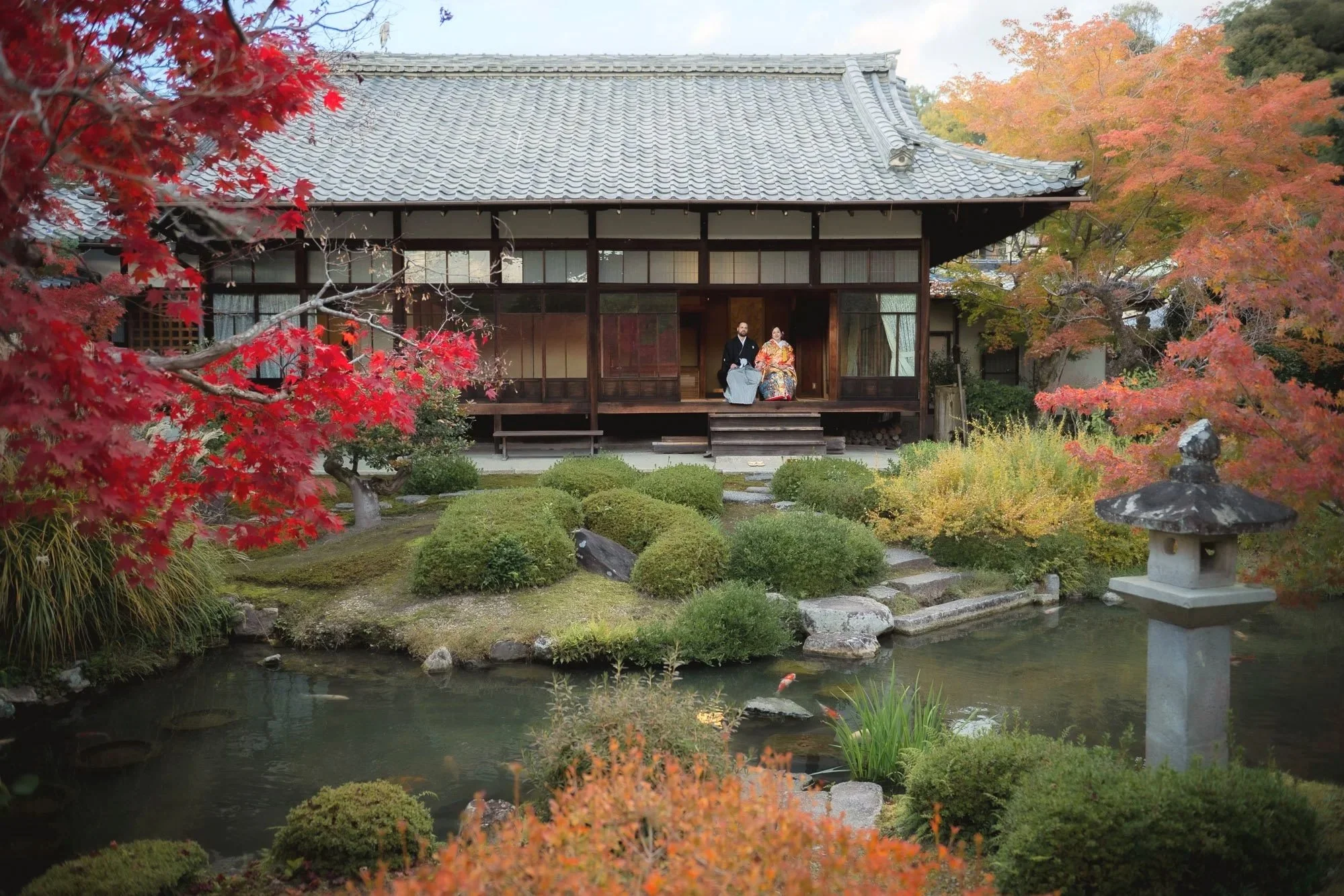
A Practical Guide for Couples Planning an Intimate Wedding
If you’re considering eloping abroad, Japan often rises to the top of the list — and for good reason.
For couples searching “elope in Japan,” the appeal is usually a mix of beauty, culture, and the promise of something quieter and more meaningful than a traditional wedding day.
But eloping in Japan is not the same as eloping elsewhere. It is shaped by permissions, cultural expectations, and a strong sense of place. Understanding those realities early allows couples to plan a day that feels calm, intentional, and genuinely intimate.
This guide answers the most common questions couples ask when they begin exploring whether Japan is the right place to elope.
Why Do Couples Choose to Elope in Japan?
Couples don’t come to Japan just for the scenery — they come for how it feels.
Japan offers something increasingly rare: calm without isolation, beauty without spectacle, and ceremony without performance. Whether you’re exchanging vows in a privately hired garden, a permitted heritage space, or a carefully chosen natural setting, the experience feels considered rather than improvised.
For many couples, eloping in Japan is about:
Letting go of large guest expectations
Choosing meaning over tradition
Creating a shared experience rather than hosting an event
Allowing place to support the moment, not overwhelm it
It’s not about disappearing. It’s about choosing carefully.
Is It Legal to Elope in Japan?
While legal marriage in Japan is possible in some cases, the practical realities mean it isn’t always the most reliable or meaningful option for international couples.
Whether a couple can legally marry here depends on several external factors, including diplomatic relationships, embassy protocols, and the specific paperwork required by Japanese city halls. These requirements can — and do — change without notice.
For example, some embassies have stopped issuing the affidavits required by Japanese authorities, which makes legal marriage in Japan impossible for certain nationalities, regardless of intent or preparation.
Because of this uncertainty, most international couples choose to complete the legal marriage process in their home country and hold a symbolic ceremony in Japan instead.
A symbolic ceremony allows couples to exchange vows, rings, and personal promises in a permitted and meaningful setting, without navigating shifting administrative requirements. It keeps the focus on the experience itself — rather than paperwork that may be outside their control.
Please note: legal requirements vary by nationality and location, and can change at short notice. Couples considering a legal marriage in Japan should always confirm current requirements directly with their embassy and local authorities before making plans.
Where Can You Elope in Japan?
Rather than thinking in terms of destinations, it’s often more helpful to think in venue types. In Japan, meaningful elopements take place in spaces that are permitted, prepared, and treated with respect.
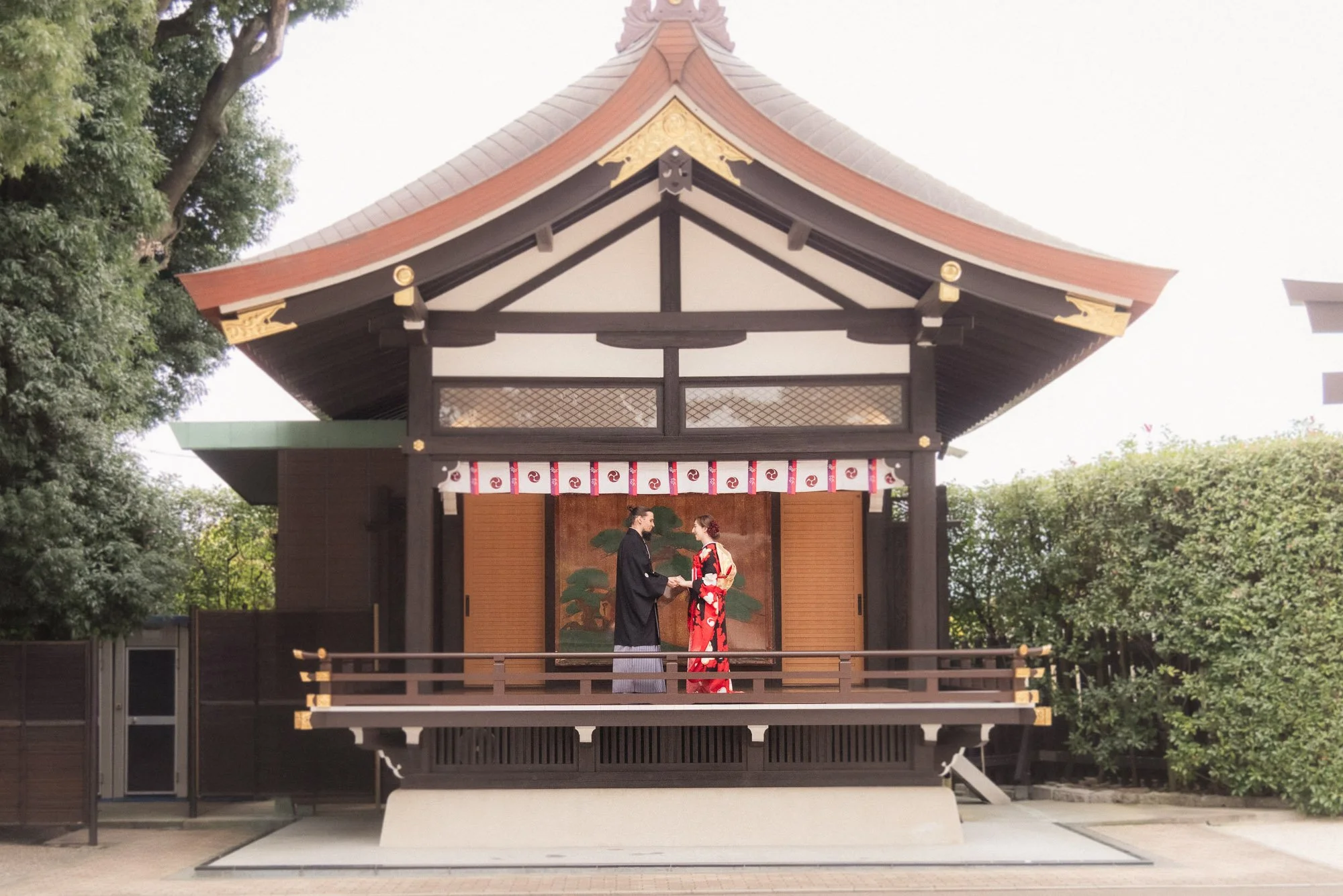
Shrines
Shrines are rooted in Shinto tradition and are often surrounded by forest or open sky. When ceremonies are permitted, they tend to feel simple, grounded, and symbolic — shaped by nature rather than spectacle.
Access varies significantly, and advance approval is essential. When available, shrine ceremonies offer a strong sense of continuity and intention.
Temples
Temples carry a quieter, more inward atmosphere. Stone paths, incense, and enclosed courtyards create a sense of calm that suits couples seeking reflection and stillness.
Temple ceremonies are carefully managed and typically limited in timing and format, reinforcing a slower, more considered rhythm.
Traditional Gardens
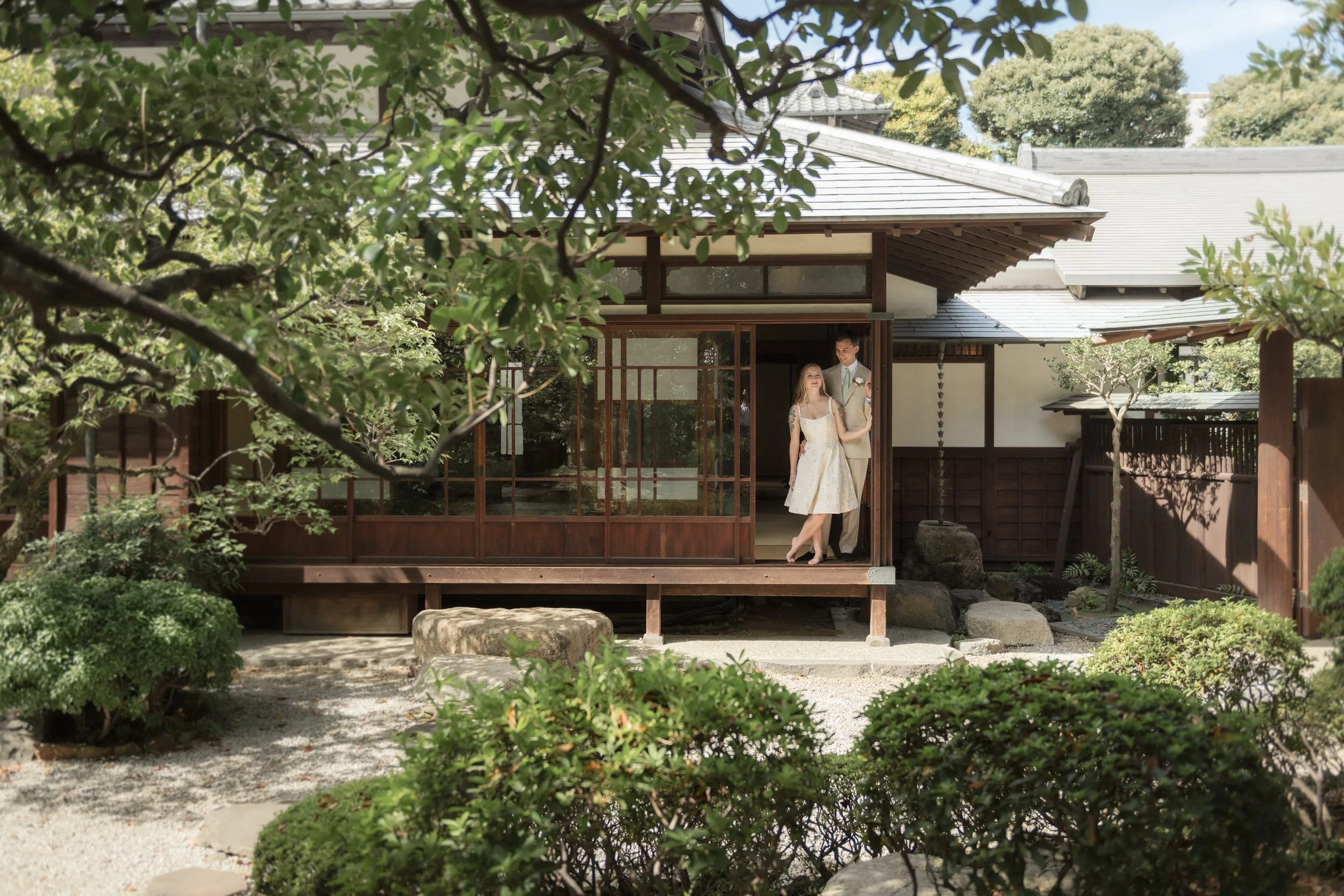
Gardens offer balance — carefully designed yet deeply natural. When used for elopements, gardens are hired privately, meaning the space is reserved entirely for the ceremony.
This ensures complete privacy and allows the ceremony to unfold without interruption. Light, layout, and movement are all considered as part of the experience.
Historic Houses and Villas
Old townhouses, merchant homes, and private villas offer a lived-in sense of intimacy. These spaces feel personal rather than performative, making them ideal for couples who value privacy above all else.
Tatami rooms, sliding doors, and natural light create an environment that feels human and grounded.
Natural Landscapes
Some ceremonies take place in carefully chosen natural settings, planned with sensitivity to access rules, conditions, and timing. These spaces require thoughtful coordination, but when approached correctly, they offer a powerful sense of scale and presence.
A practical note: Japan does not operate on open-access wedding locations. Meaningful elopements rely on permissions, timing, and respect for each space. This structure is what allows the experience to feel calm rather than constrained.
When Is the Right Time to Elope in Japan?
When couples ask about timing, they often think in terms of months or seasons. In practice, timing in Japan is less about the calendar and more about how the day is structured — particularly the distinction between ceremony and photography.
Ceremony Timing: Privacy First
Elopement ceremonies are held in private or permitted venues, such as hired gardens, temples, villas, or approved locations. These are scheduled intentionally, with privacy and atmosphere as the priority.
Because the space is controlled, ceremony timing is shaped by light, mood, and logistics — not by the need to avoid public presence. This allows couples to be fully present and unhurried.
Photography Timing: Reading the Environment
Photography may take place in private venues or, where appropriate, public spaces. When public locations are involved, timing becomes more sensitive and is planned carefully.
Early mornings often offer softer light and fewer distractions, particularly for couples wearing wedding attire. As conditions change, locations are chosen or adjusted accordingly.
Weekdays and Flow
While ceremonies themselves are private, the wider environment still matters. Weekdays tend to offer more predictability when moving between locations and planning photography, while weekends introduce additional variables.
Light and Weather
Japan’s light is subtle and architectural, changing hour by hour. Weather follows broad patterns but shifts quickly in detail.
Successful elopements are planned with built-in flexibility, allowing adjustments without stress and ensuring the day feels cohesive from start to finish.
Do You Need a Planner to Elope in Japan?
Yes. If you want to hold a formal or structured elopement ceremony in Japan, particularly at a shrine, temple, garden, historic house or other managed venue, you will normally need a planner.
That said, Couples who already have their arrangements in place or who want a simpler photography-led experience may not require full planning. Read more about photography-only elopements in Japan.
Eloping in Japan is not a simplified version of a traditional wedding. It is a different system entirely, shaped by permissions, cultural protocols, and venue-specific rules that are not negotiable or intuitive.
Japan does not operate on an open-access model. Most meaningful spaces — shrines, temples, gardens, historic houses, heritage locations — require advance approval, strict scheduling, and clear adherence to what is and isn’t allowed. These decisions are made by venue custodians, not couples, and they vary widely from place to place.
A planner’s role in Japan is not about decoration or optional support. It is about responsibility.
A dedicated elopement planner ensures:
The ceremony location explicitly allows elopements and photography
Permissions are secured correctly and respectfully
Timelines align with venue rules, light, and logistics
Vendors are legally able to work in Japan and familiar with local expectations
The day unfolds quietly, without drawing unwanted attention or disruption
Without this structure, couples are often left navigating assumptions rather than realities — discovering too late that a location does not allow ceremonies, that photography is restricted, or that access has been misunderstood.
This is why elopement planning in Japan is a standalone role, not something folded casually into photography or venue booking. When planning is handled properly, the experience feels effortless. When it isn’t, even the most beautiful setting can become stressful or constrained.
Working with a planner who understands how Japan functions — culturally, administratively, and practically — is what allows couples to relax, be present, and trust that their elopement is unfolding as intended.
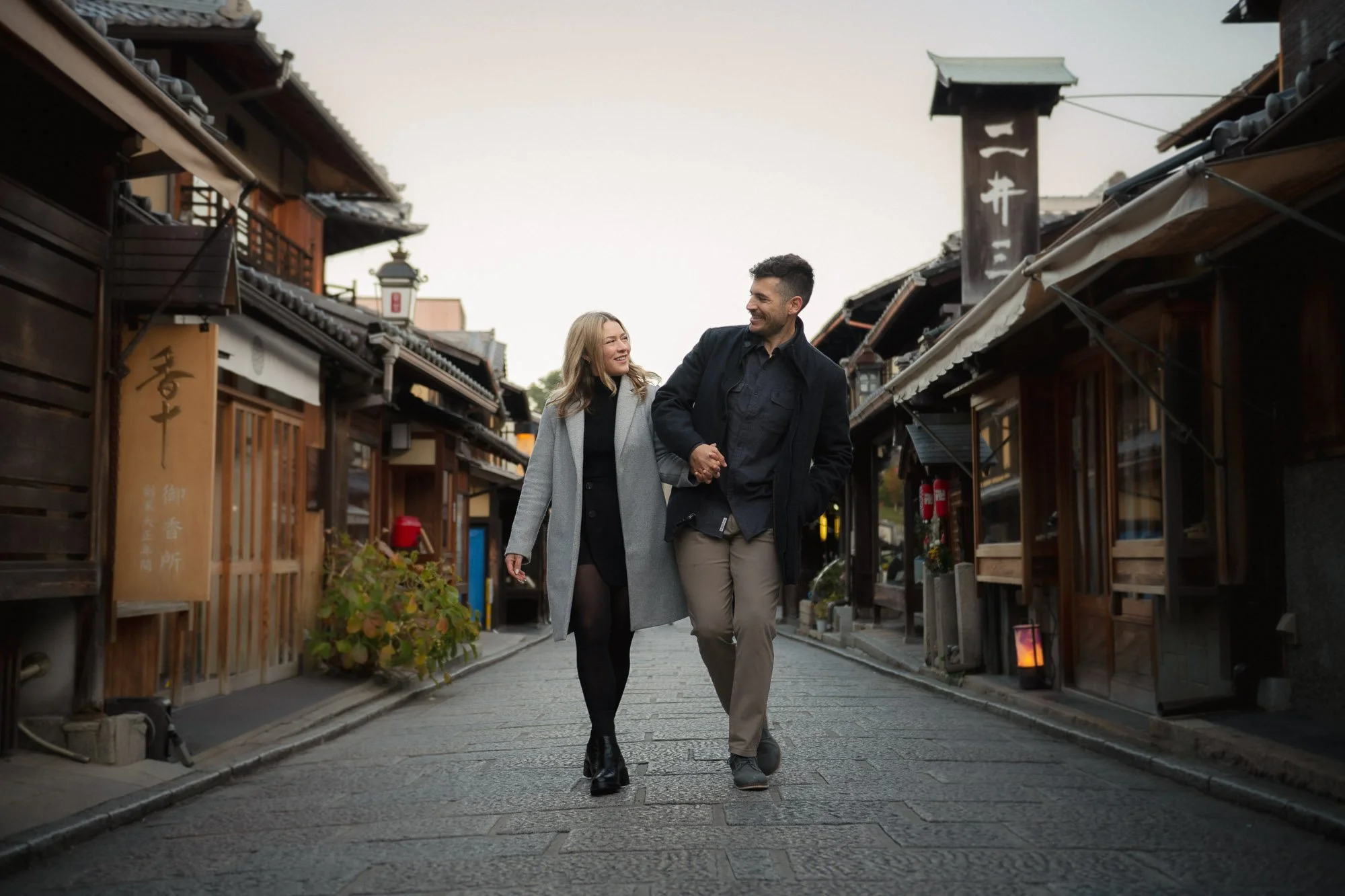
A happy couple enjoy a dawn photo session as a warm up for the main event later in the day.
What Is Elopement Photography Like in Japan?
Photography in Japan rewards patience and awareness.
The most meaningful images come from allowing space for moments to unfold naturally. Light shifts subtly. Architecture shapes movement. Silence appears unexpectedly.
My approach is guided by rhythm rather than posing — observing pauses, transitions, and small gestures. This only works when couples feel relaxed, which is why privacy, permission, and planning matter just as much as the camera.
Cultural Respect Matters More Than Ever
Eloping in Japan is a privilege.
Many spaces operate on trust, and that trust depends on couples behaving thoughtfully. This means working only with venues that allow ceremonies, following agreed guidelines, and avoiding disruption.
Respect doesn’t limit the experience — it deepens it. Couples who approach Japan with care often find the day feels more meaningful, not less.
Is Japan Right for Your Elopement?
Eloping in Japan isn’t for everyone — and that’s a good thing.
It suits couples who value:
Privacy over spectacle
Intention over improvisation
Calm over chaos
If you’re looking for a wedding day that feels grounded, considered, and quietly unforgettable, Japan offers a setting unlike anywhere else.
Final Thoughts
When people search “elope in Japan,” they’re usually at the beginning of a decision — looking for clarity rather than fantasy.
Eloping here is less about escape and more about presence.
Less about being seen and more about choosing carefully.
If that resonates, then Japan may already be telling you something.
To explore what eloping in Japan could look like for you, reach out — or learn more through our dedicated planning team at Elope in Japan.
Frequently Asked Questions About Eloping in Japan
-
Yes. Elopements in Japan take place in permitted and approved spaces, not open public locations. Shrines, temples, gardens, historic houses, and heritage sites each operate under their own custodianship, and advance approval is required.
Working with a planner ensures the chosen venue explicitly allows ceremonies and photography, and that all guidelines are respected. -
Elopement ceremonies are not held in public parks or streets. However, photography may take place in public spaces where permitted, and is planned carefully with attention to timing, attire, and local context.
This distinction allows couples to experience Japan naturally while ensuring the ceremony itself remains private, respectful, and uninterrupted. -
In practice, no. Japan does not operate on an open-access or DIY wedding model. Permissions, scheduling, venue rules, and cultural expectations must all be handled correctly.
A dedicated elopement planner is responsible for securing approvals, coordinating compliant vendors, and structuring the day so it unfolds calmly and smoothly. Without this support, couples often encounter restrictions or misunderstandings too late.